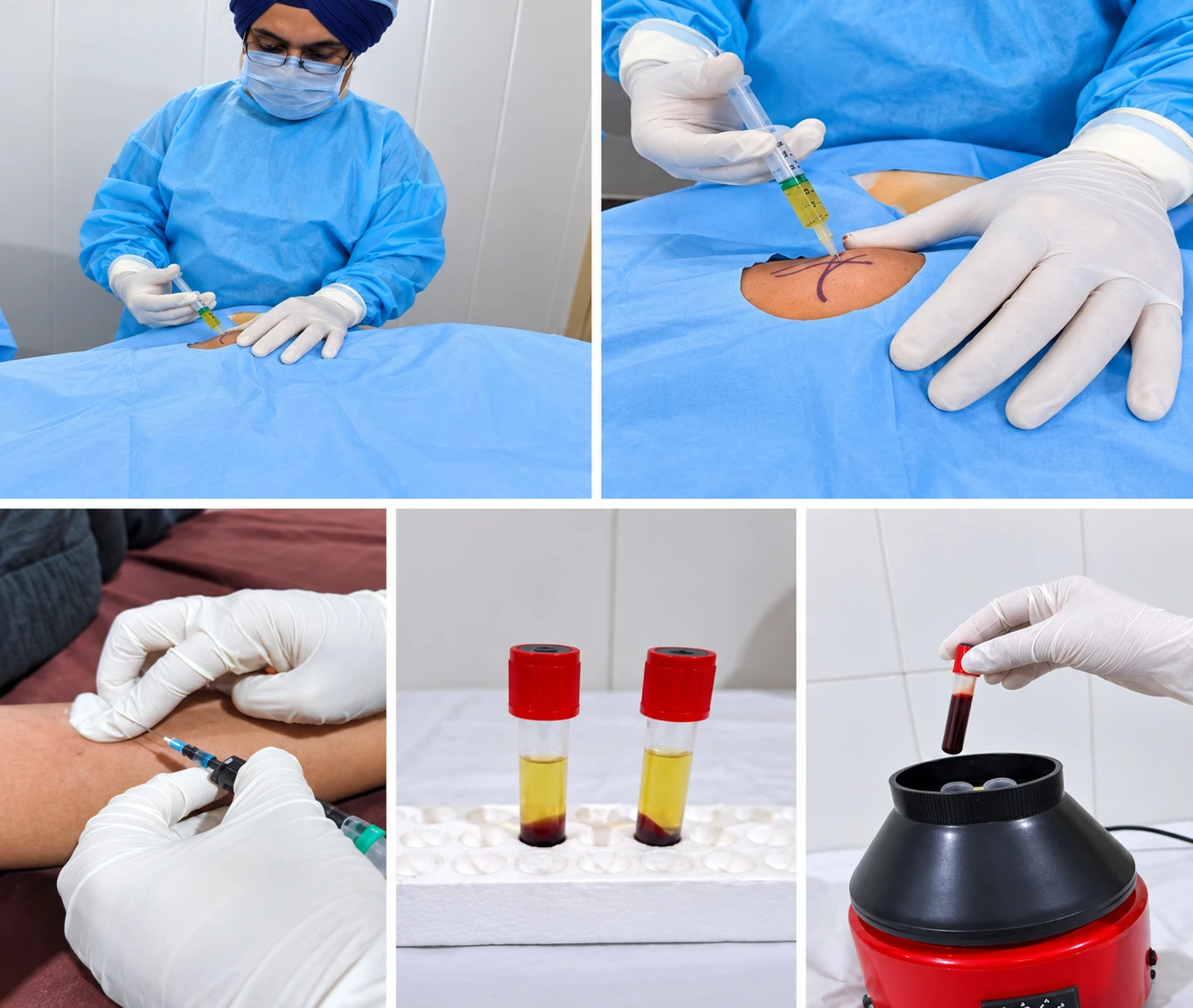
Platelet-Rich Plasma (PRP) Therapy
Platelet-Rich Plasma (PRP) therapy is a medical treatment that involves using a concentration of a patient's own platelets to promote healing and stimulate tissue regeneration. Platelets are small cell fragments in the blood that contain growth factors and other proteins essential for wound healing and tissue repair. PRP injections are commonly used to treat musculoskeletal conditions such as osteoarthritis, tendon injuries, and ligament sprains.
Book a ConsultationWhat Is PRP Therapy?
PRP therapy uses a concentration of platelets obtained from a patient's own blood. These platelets contain growth factors and proteins involved in the body's natural healing processes.
Blood Sample
A blood sample is collected from the patient as part of the PRP preparation procedure.
Platelet Concentration
The collected blood is processed using a centrifuge to separate and concentrate its components.
PRP Injection
The prepared platelet-rich plasma may be injected into the selected treatment area by a qualified medical professional.
How Does PRP Therapy Work?
PRP preparation generally involves blood collection, processing and application. The exact procedure depends on the patient's condition and the treating doctor's assessment.
Blood Collection
A small blood sample is collected from the patient under appropriate clinical conditions.
Centrifugation
The blood sample is processed in a centrifuge to separate its components and obtain platelet-rich plasma.
Clinical Application
The prepared PRP is administered to the selected area as determined by the treating medical professional.
Is PRP Therapy Suitable for Everyone?
The suitability of PRP therapy depends on several factors, including the patient's medical history, diagnosis, overall health and the condition being treated.
A consultation and clinical evaluation are important before deciding whether PRP therapy is an appropriate treatment option. Your doctor can explain the potential benefits, limitations, risks and available alternatives.
Have Questions About PRP Therapy?
Consult with our orthopaedic team to understand the treatment process and discuss whether PRP therapy may be suitable for your condition.
Contact Us